EMT Practice Test

1. Question Content...


Question List

Question1: What do the API invocation metrics provided by Anypoint Platform provide?
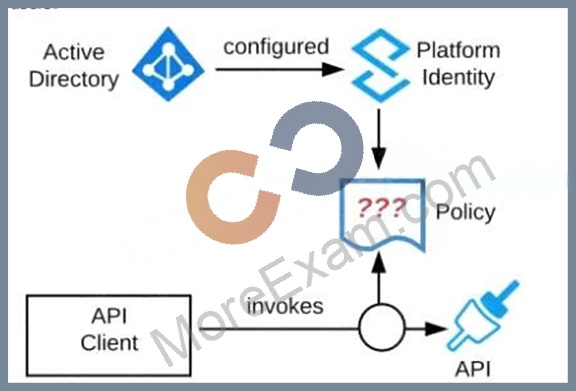
Question2: Refer to the exhibit. An organization is running a Mule standalone runtime and has configured Active Directory as the Anypoint Platform external Identity Provider. The organization does not have budget for other system components.

What policy should be applied to all instances of APIs in the organization to most effecuvelyKestrict access to a specific group of internal users?

Question3: An organization has several APIs that accept JSON data over HTTP POST. The APIs are all publicly available and are associated with several mobile applications and web applications.
The organization does NOT want to use any authentication or compliance policies for these APIs, but at the same time, is worried that some bad actor could send payloads that could somehow compromise the applications or servers running the API implementations.
What out-of-the-box Anypoint Platform policy can address exposure to this threat?

Question4: When using CloudHub with the Shared Load Balancer, what is managed EXCLUSIVELY by the API implementation (the Mule application) and NOT by Anypoint Platform?

Question5: What condition requires using a CloudHub Dedicated Load Balancer?
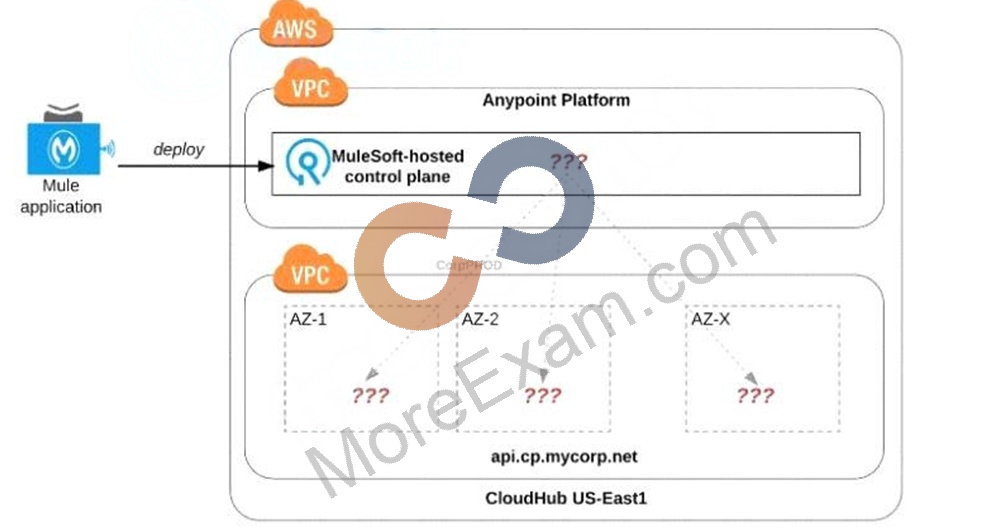
Question6: Refer to the exhibit.

An organization uses one specific CloudHub (AWS) region for all CloudHub deployments.
How are CloudHub workers assigned to availability zones (AZs) when the organization's Mule applications are deployed to CloudHub in that region?

Question7: What best explains the use of auto-discovery in API implementations?
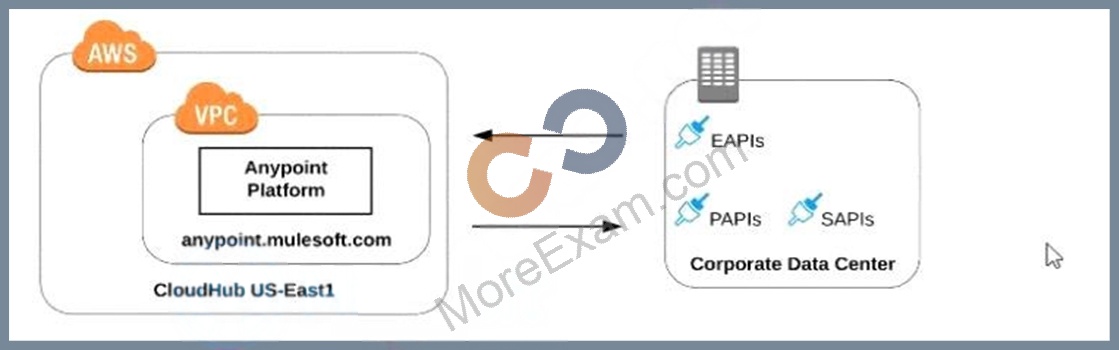
Question8: When could the API data model of a System API reasonably mimic the data model exposed by the corresponding backend system, with minimal improvements over the backend system's data model?

Question9: An API implementation is deployed on a single worker on CloudHub and invoked by external API clients (outside of CloudHub). How can an alert be set up that is guaranteed to trigger AS SOON AS that API implementation stops responding to API invocations?

Question10: What best describes the Fully Qualified Domain Names (FQDNs), also known as DNS entries, created when a Mule application is deployed to the CloudHub Shared Worker Cloud?

Question11: An Order API must be designed that contains significant amounts of integration logic and involves the invocation of the Product API.
The power relationship between Order API and Product API is one of "Customer/Supplier", because the Product API is used heavily throughout the organization and is developed by a dedicated development team located in the office of the CTO.
What strategy should be used to deal with the API data model of the Product API within the Order API?

Question12: A System API is designed to retrieve data from a backend system that has scalability challenges. What API policy can best safeguard the backend system?

Question13: An organization is deploying their new implementation of the OrderStatus System API to multiple workers in CloudHub. This API fronts the organization's on-premises Order Management System, which is accessed by the API implementation over an IPsec tunnel.
What type of error typically does NOT result in a service outage of the OrderStatus System API?

Question14: What is a key performance indicator (KPI) that measures the success of a typical C4E that is immediately apparent in responses from the Anypoint Platform APIs?

Question15: A new upstream API Is being designed to offer an SLA of 500 ms median and 800 ms maximum (99th percentile) response time. The corresponding API implementation needs to sequentially invoke 3 downstream APIs of very similar complexity.
The first of these downstream APIs offers the following SLA for its response time: median: 100 ms, 80th percentile: 500 ms, 95th percentile: 1000 ms.
If possible, how can a timeout be set in the upstream API for the invocation of the first downstream API to meet the new upstream API's desired SLA?

Question16: What is a key requirement when using an external Identity Provider for Client Management in Anypoint Platform?

Question17: The implementation of a Process API must change.
What is a valid approach that minimizes the impact of this change on API clients?

Question18: Refer to the exhibit.

what is true when using customer-hosted Mule runtimes with the MuleSoft-hosted Anypoint Platform control plane (hybrid deployment)?

Question19: What CANNOT be effectively enforced using an API policy in Anypoint Platform?

Question20: What is true about API implementations when dealing with legal regulations that require all data processing to be performed within a certain jurisdiction (such as in the USA or the EU)?

Question21: Refer to the exhibit.

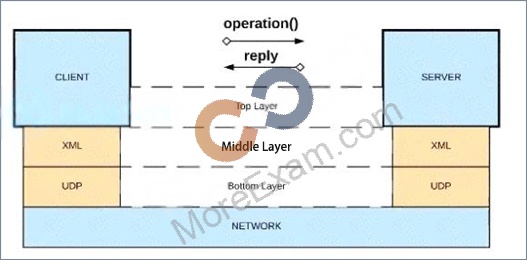
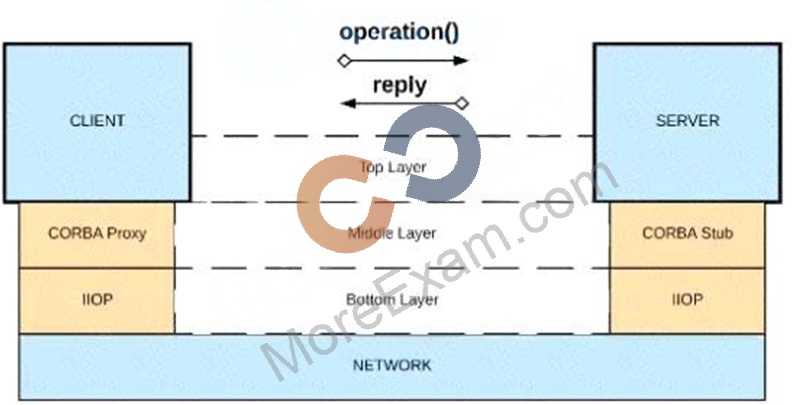
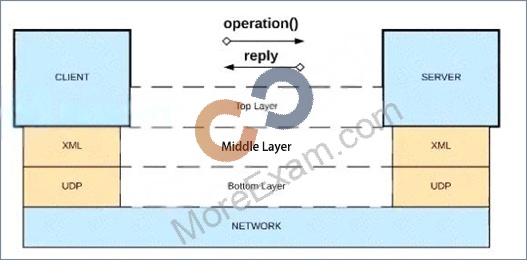
What is a valid API in the sense of API-led connectivity and application networks?
A) Java RMI over TCP

B) Java RMI over TCP

C) CORBA over HOP

D) XML over UDP